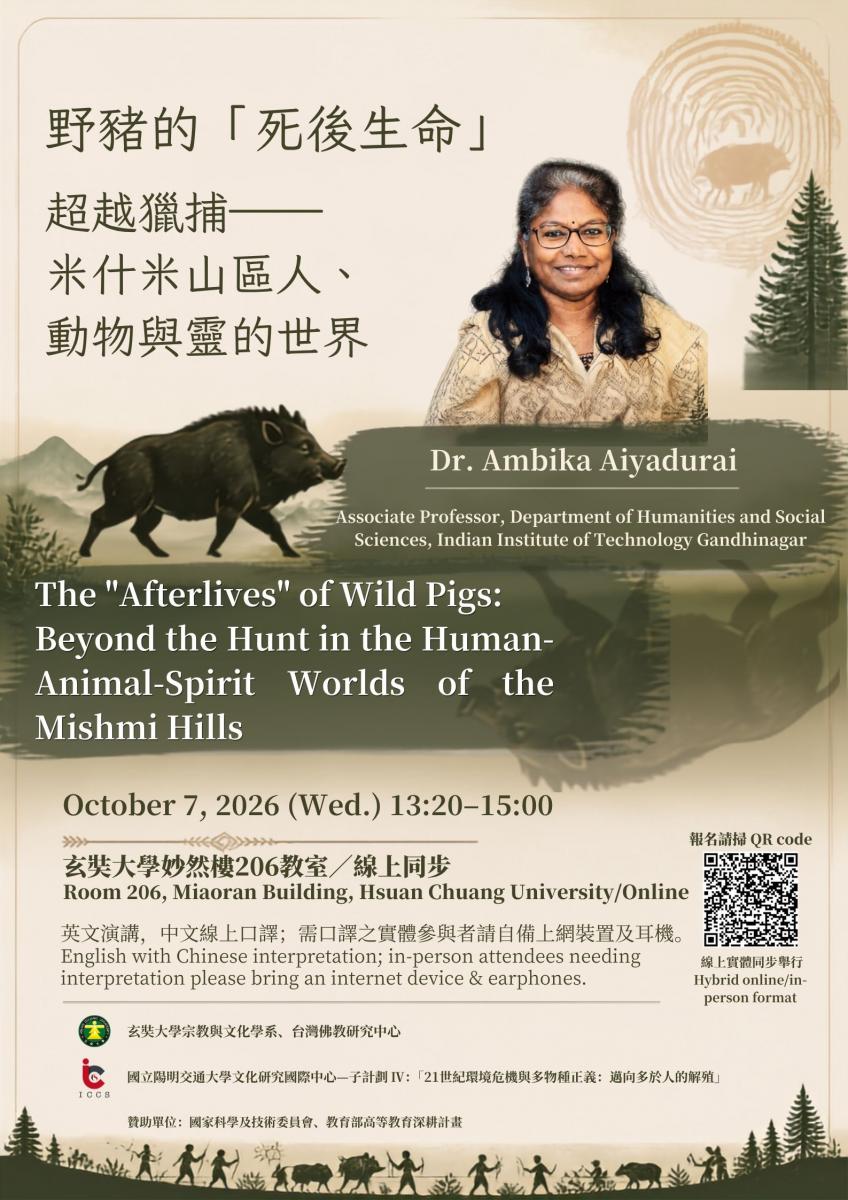
近期出版 Recent Publication
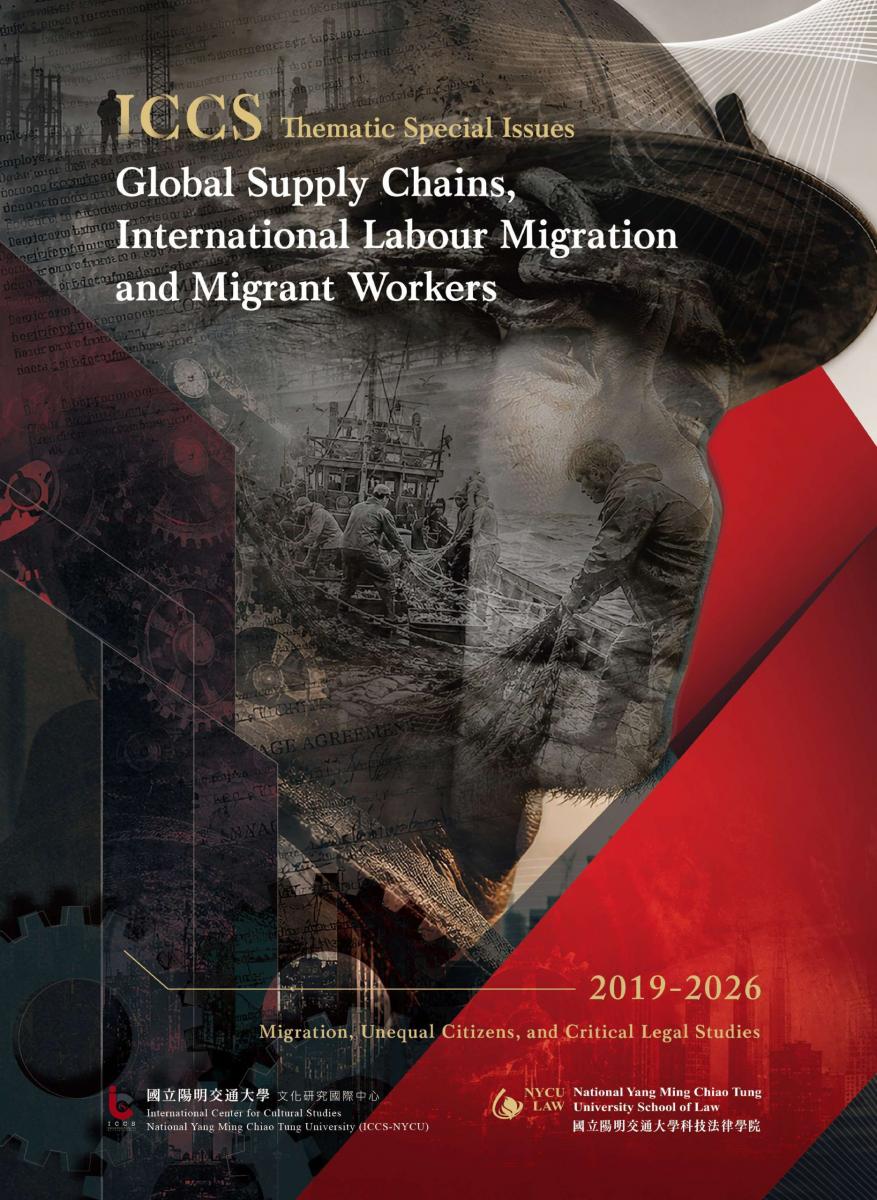
ICCS Thematic Special Issues: Global Supply Chains, International Labour Migration and Migrant Workers (2019–2026) — Migration, Unequal Citizens, and Critical Legal Studies
more_compressed_page-0001.jpg)
2026-04-15 - 2026-04-15
Kwang-Suk Lee (Director of Post-Future Research Institute, Seoul National University of Science and Technology)
Online(via Webax)
The Chip Era and Digital Governance, Forum 13
Date: April 15, 2026(Wednesday), 13:30–15:30(GMT+8, Taiwan Time)/14:30–16:30 (GMT+9,KST)
Meeting Link https://nctulaw.webex.com/
*The lecture will be conducted entirely in Mandarin with English simultaneous
*Sign up
Abstract
This event, co-hosted by ICCS, PRI, examines how generative AI restructures creative labor in East Asia. Contrary to mass displacement narratives, AI proliferation intensifies precarity and reshapes labor conditions. Empirical findings highlight increased post-generative workloads, reduced cognitive autonomy, and rising stress, especially in techno-optimistic contexts. Rather than replacing creativity, AI fosters labor fragmentation and data extraction. The event further explores institutional and individual responses to safeguard creative labor rights.
Keynote Presentation
Prof. Kwang-Suk Lee (Director of Post-Future Research Institute, Seoul National University of Science and Technology)
Biography :
Lee, Kwang-Suk is a full professor in the Graduate School of Public Policy and Information Technology at Seoul National University of Science and Technology (SeoulTech), Seoul. He is working as the editor-in-chief (Jan 2019 ~ present) of Culture/Science, a quarterly journal of cultural theories, and the director of Post
Future Research Institute (PRI). Lee’s Research areas include critical studies of technology, techno-ecologies, platform studies, AI automation and labor, the technological development in East Asian states, and the socio-cultural history of the Internet in Korea.
Lee is the author of several books, AI Media Ecology (Seoul, 2025), Digital-Binge Society (Seoul, 2022), Phygital Commons (Seoul, 2021), PostDigital (Seoul, 2021) against Techno-Fetishism (Seoul, 2020), Data Aesthetics in Society (Seoul, 2017), Rethinking the Datafied Society (Seoul, 2017), Aesthetic Notes from the Edge: Art Activism Responding to a Social Crisis (Seoul, 2016), New Art Activism: The Cultural Politics in the Era of Post-media (Seoul, 2015), Digital Barbarism: Techno-glut, Big Data and Information Disaster (Seoul, 2014) IT development in Korea: A Broadband Nirvana?
(London: Routledge, 2012), The Art & Cultural Politics of Cyber Avant-gardes (Seoul, 2010), Digital Paradoxes: The Political Economy of Cyberspace (Seoul, 2000) and Cultural Politics in Cyberspace (Seoul, 1998), including the select edited books of AI, Platform, and the Future of Work (Seoul, 2023), Impure technology (Seoul, 2014) and Some Branches of the Contemporary Techno-media Philosophies (Seoul, 2016).
Lee’s scholarly writing has appeared in 热风学术(Refengxueshu, Shanghai), Media, Culture & Society, The International Communication Gazette, The International Journal of Cultural Policy, Info, The Government Information Quarterly, and The Information Society. As a columnist and public intellectual, Lee has contributed numerous columns and essays related to digital society to Korean newspapers, magazines, and other publications.
Discussant
Visiting Prof. Dr. Sangmin Kim (Yonsei University)
Biography :
Sangmin Kim researches with a focus on the diverse lives of the (non)human that emerge and are observed at the intersection of technology, culture, and art. He teaches media culture studies, visual culture, and popular culture theory at several universities in Seoul, and serves as the director of the 'Non-human Research Group' within the Transdisciplinary Research Program at the Korea Institute for Advanced Study. He is active as a research fellow at the independent researcher group 'CATS Lab' and as an editorial board member of the cultural theory journal Culture/Science.
His major publications include The Culture and Technology of Digital Self-Archiving, Non-human: Thinking with Objects, Life, Machines, and the Planet, and The Future of Artificial Intelligence, Platforms, and Labor.
Secretary-General Fu-Chuan Tseng (Taipei Art Creators’ Union)
Biography :
Tseng, Fu-Chuan is the Secretary-General of the Taipei Art Creators Trade Union. He has long been concerned with the labor conditions, professional protection, and organizational development of art workers, and is committed to advancing labor rights, contract systems, occupational safety, and public policy advocacy within the arts and cultural sector. In recent years, he has continued to engage in labor surveys of art workers, legal consultation, contract template development, public education, and cross-sector collaboration, with the aim of ensuring that artistic work is not merely romanticized as a matter of passion, but recognized as work that deserves basic protections, dignity, and institutional support.
Associate Prof. Yu-Fan Chiu (School of Law, National Yang Ming Chiao Tung University)
Biography :
Associate Professor Yu-Fan Chiu joined the School of Law at National Yang Ming Chiao Tung University (NYCU) in 2016. Her academic expertise lies in labour law, with a
particular focus on collective labour law issues, including industrial action (strikes), collective bargaining, and unfair labour practices. Prior to receiving her PhD in Law from the University of Göttingen, Germany, in 2015, she worked as an attorney at Formosan Brothers Attorneys-at-Law in Taiwan. She also served as Director of the Research Department and as a lawyer for the Chunghwa Telecom Workers’Union. During her time in Germany, she was a member of the German United Services Union (ver.di) and the German Metalworkers’Union (IG Metall), and completed internships in both the Legal Department and the International Department at IG Metall’s headquarters in Frankfurt.
Associate Professor Chiu has long been deeply engaged in trade union affairs. She currently offers a Labour Law Programme at the School of Law. She also serves as the Principal Investigator of the project “Migration, Unequal Citizens, and Critical Legal Studies” at the International Center for Cultural Studies (ICCS-NCTU), National Yang Ming Chiao Tung University. Her recent research focuses on labour issues arising from globalisation and contemporary emerging challenges. These include forced labour and migrant workers’ human rights within global supply chains, legal protection for workers in the digital economy, and the role of labour unions in issues of just transition in the context of net-zero transformation.
Organizer:
International Center for Cultural Studies, National Yang Ming Chiao Tung University (ICCS-NYCU)
Post-Future Research Institute, Seoul National University of Science and Technology School of Law, National Yang Ming Chiao Tung University (NYCU LAW)
近期活動 Recent Activities
.png)
.png)
2026-10-21 - 2026-12-31
more