
Report|Forced Labor Risks and Enforcement Failures in Thailand Supply
2025-12-10
Date:December 10, 2025 (Wednesday), 13:30–16:00 (GMT+8, Taiwan Time)
Venue :陽明交通大學光復校區管理二館1069室(NYCU, Hsinchu, Taiwan, Management Building 2, Room 1069)
Moderator :Assoc. Prof. Bo-Shone Fu 傅柏翔副教授/國立台北大學法律學院(College of Law, National Taipei University)
Keynote Speakers :Assoc. Prof. Panthip Van Pruksacholavit 副教授(泰國朱拉隆功大學法學院, Faculty of Law, Chulalongkorn University)
Report by Hui-Chen Wu (Master’s Student, Graduate Institute of Technology Law, National Yang Ming Chiao Tung University)
Event Info:LINK
Event photo:LINK
Event viedo: https://youtu.
Risk concentration and the enforcement gap
Associate Professor Panthip Pruksacholavit notes that identified forced-labor cases in Thailand are concentrated mainly in fishing and seafood processing, and that roughly 15% of migrant workers show indicators of forced-labor risk in workplace settings. Although the Thai government has introduced multiple reforms, their overall impact remains limited. The core issue is not a lack of laws, but the persistent gap between rules on paper and enforcement in practice—often compounded by corruption.
Where vulnerability begins
She explains that migrants come to Thailand not only for higher wages, but also because geographic proximity makes cross-border movement easier. Yet people from Myanmar and similar countries—facing war, conscription, and visa barriers—often cannot secure work permits through formal channels. Even when they try, quota limits and administrative delays frequently push them into an “enter first, work first, repay later” model, where debt and precarious legal status become the starting point for exploitation. Without documents or outside connections, migrants may be housed collectively in closed dormitories and transported on long commutes, making it difficult to claim rights to lawful wages and working hours, freedom of association, or accessible grievance mechanisms—and leaving them afraid to seek help from police.
Governance blind spots
Formally, Thai law includes provisions on recruitment-fee responsibilities, job mobility within a period, equal protection and equal pay, and communication equipment on fishing vessels. But weak enforcement erodes these protections. Supply-chain pressure can work where factories supply international brands, but is far less effective in domestically oriented sectors. She also questions audit credibility: the same factory may receive inconsistent findings from different auditors yet still score highly, revealing governance gaps in standards, auditor selection, and quality oversight. Even stronger penalties will do little to deter if enforcement failures and corruption remain unaddressed.
Filling the Key Gaps in Combating Forced Labor
Associate Professor Panthip Pruksacholavit emphasizes that the core problem of forced labor in Thailand is not a lack of legal regulation, but rather longstanding enforcement gaps and corruption, which make rights on paper difficult to realize. To reduce migrant workers’vulnerability regarding status and rights, she argues that visa and work permit processing times should be shortened and procedural transparency enhanced, to curb broker manipulation and prevent undocumented situations arising from irregular entry. She further calls for improving the quality of labor inspections and oversight mechanisms, establishing accessible complaint channels for workers, and reviewing existing restrictions on migrant workers’rights to organize to address critical gaps in supply-chain governance and labor protection.
近期新聞 Recent News
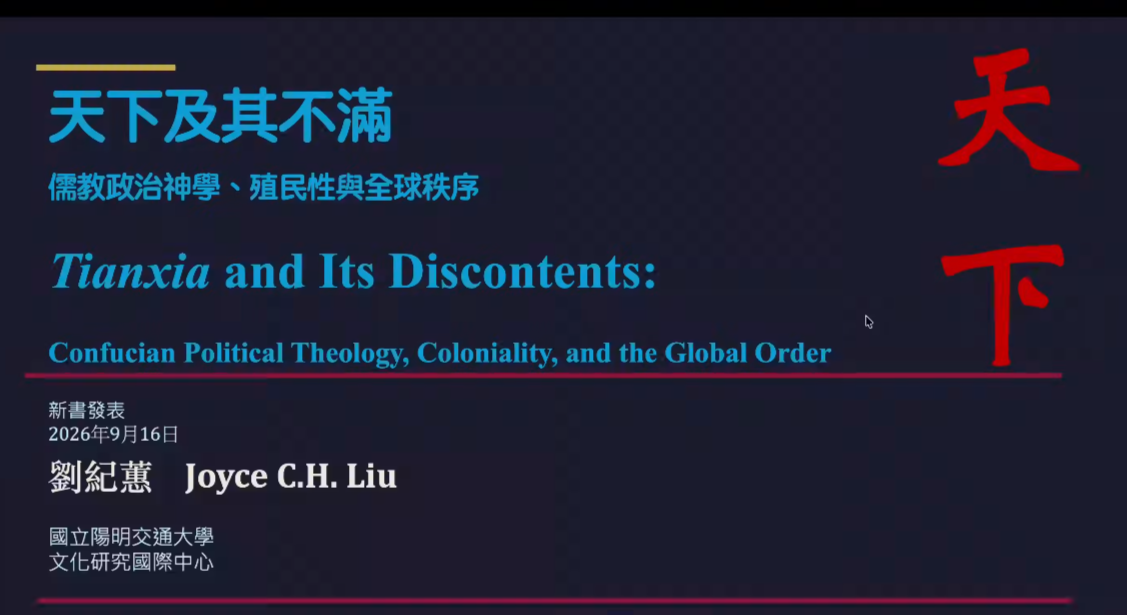
Tianxia and Its Discontents: Confucian Political Theology, Coloniality, and the Global Order (Routledge, 2026b)
2026-10-01
more
report|Tianxia and Its Discontents: Confucian Political Theology, Coloniality, and the Global Order (Routledge, 2026b)
2026-09-29
more.jpg)
.jpg)