
Repert | Semiconductor Supply Chain Diversification: Understanding Taiwan’s Chip Prospects in the Southbound Countries
2026-10-02
Professor Roger C. Liu, Ph.D. ,Dr. Megha Shrivastava
Online Discussion
The Chip Era and Digital Governance Forum 17
Semiconductor Supply Chain Diversification: Understanding Taiwan’s Chip Prospects in the Southbound Countries
Introduction
The forum examined how Taiwan might diversify its semiconductor supply chain amid growing international concern over the geographical concentration of advanced chip production.
Taiwan currently possesses most of the world’s advanced logic-chip manufacturing capacity, alongside significant assembly and testing capabilities and a highly concentrated supplier ecosystem. However, it has exposed the industry to the risk of a single point of failure. A conflict in the Taiwan Strait could generate an estimated USD 10.6 trillion in economic losses. Semiconductor diversification has therefore become not merely an industrial strategy but also a matter of international security and public policy.
The two presentations approached this problem from complementary perspectives. Megha Shrivastava examined the strategic options available to Taiwan in Singapore, Malaysia, Vietnam, and India. Roger C. Liu focused on the actual overseas distribution of Taiwanese semiconductor firms and the uneven state capacities that determine where investment ultimately takes place. Taken together, their presentations demonstrated that diversification entails selectively distributing different parts of the value chain while retaining Taiwan’s technological core. This model may reduce certain vulnerabilities, but it also creates new forms of interdependence.
Megha Shrivastava
Taiwan’s Semiconductor Conundrum and Supply Chain Diversification
Shrivastava began by outlining Taiwan’s semiconductor conundrum. Taiwan faces external pressure to diversify its highly concentrated production capacity while simultaneously confronting the expansion of China’s mature-node manufacturing. Domestically, demographic decline, limited industrial land, and the political and environmental challenges of constructing new fabrication plants constrain the industry’s continued expansion. Diversification must therefore respond to both external security pressures and internal limitations.
The Silicon Shield paradox
According to one interpretation, Taiwan’s semiconductor concentration functions as a deterrent: it raises the economic cost of an invasion for Beijing and the cost of abandoning Taiwan for Washington. A more skeptical reading suggests that the semiconductor industry may make Taiwan a valuable target and invite coercion rather than prevent it. A third argument maintains that the real deterrent is not the continued operation of Taiwan’s fabrication plants but the credible possibility that they could be rendered inoperable during a conflict.
These competing interpretations have important implications for diversification. If semiconductor concentration effectively deters aggression, dispersing production may weaken Taiwan’s strategic position and should be limited to carefully selected. If the Silicon Shield does not provide meaningful deterrence, accelerating diversification would impose fewer strategic costs. Shrivastava cautioned that any potential conflict would be shaped by political, military, and security considerations that exceed the semiconductor industry.
Shrivastava defined diversification through three related dimensions. First, it involves the geographical dispersal of production capacity and input sources without necessarily removing existing capacity from Taiwan. Second, it seeks to reduce single-point-of-failure risks, move selected production closer to customers, mitigate tariff exposure, and decrease dependence on foreign inputs. Third, it requires outward investment in partner economies, resilient domestic micro-clusters, and bilateral chip and investment agreements.
She then compared four countries: Singapore, Malaysia, Vietnam, and India. Each offers a different position within the semiconductor value chain and a distinct proposition for Taiwanese investment.
Singapore is already deeply embedded in the global semiconductor industry. Its strengths include world-class infrastructure, reliable utilities, regulatory stability, sophisticated research institutions, and access to investment capital. These advantages make it particularly suitable for design, research, and development, as well as other high-value activities. Its limitations are equally clear: high labor and electricity costs and severely constrained land availability make large-scale fabrication expansion difficult. Singapore must therefore maintain a premium offering rather than compete with Malaysia or Vietnam in volume manufacturing. Shrivastava identified design, research and development, and advanced packaging as its most realistic entry segments.
Malaysia offers the most established large-scale assembly, testing, and packaging ecosystem among the Southbound countries. Penang’s electrical and electronics cluster provides a functioning industrial base, competitive operating costs, supportive foreign-investment policies, and decades of experience in outsourced semiconductor assembly and testing, or OSAT. Malaysia is also attempting to move into higher-value activities, including advanced packaging and integrated-circuit design. Nevertheless, it continues to face gaps in highly specialized fabrication skill. For Taiwan, Malaysia’s most realistic role would be the upgrading of advanced packaging and related equipment industries.
Vietnam presents the lowest-cost manufacturing option. It possesses competitive labor costs, a growing electronics sector, a developing supplier base, and multiple tax incentives. However, infrastructure and logistics remain less developed, while changing electricity prices and gaps in investment incentives create uncertainty. Vietnam’s failure to secure several large investment projects also illustrates the difficulty of attracting capital-intensive fabrication plants without sufficiently competitive support packages. Its near-term role is therefore more likely to lie in components, circuit boards, and testing.
India differs from the other cases because of its enormous domestic market, large land supply, growing electronics demand, relatively low industrial electricity prices in some states, and strong policy commitment. Domestic consumer electronics and electric-vehicle industries could anchor local demand for chips. Yet infrastructure gaps, inconsistent implementation across states, complex land acquisition, shortages of experienced fabrication personnel, and uncertainty over power and water supplies continue to impede investment. Shrivastava consequently proposed a sequential strategy: packaging first, followed by mature-node fabrication if operating conditions improve.
Despite these opportunities, Shrivastava argued that TSMC’s expansion into Southbound countries would probably remain limited. TSMC’s business model depends on access to major customers, advanced-node production, operational readiness, and strong intellectual-property protection. Most Southbound markets are not yet prepared to manufacture at advanced nanometer nodes. Countries with insufficient legal protections and regulatory systems are unlikely to attract a company whose competitive advantage rests on proprietary technologies and highly sophisticated production processes.
Roger C. Liu
Uneven Silicon and Taiwan’s Semiconductor Deployment in the Southbound Region
Where Shrivastava analyzed Taiwan’s available strategic choices, Roger C. Liu examined where Taiwanese semiconductor firms have actually invested. Among the eighteen countries covered by the New Southbound Policy, only seven possess both production-stage capacity, such as fabrication, OSAT, or printed circuit board manufacturing, and a dedicated national semiconductor policy. Other countries have scattered electronics assembly operations but lack the industrial depth and policy framework needed to support a semiconductor ecosystem.
According to Liu, Singapore has received the largest share of Taiwanese semiconductor investment in the region, followed by Thailand and Malaysia, with the Philippines occupying a more limited position.
Singapore’s prominence demonstrates that the decisive factor is its political stability, infrastructure reliability, predictable regulation, and accumulated industrial expertise, which make it a secure location for Taiwanese capital. Malaysia, meanwhile, is the only Southeast Asian country combining approximately half a century of OSAT experience, a coherent national strategy, and a deliberate effort to remain relatively neutral. This explains why American, European, Chinese, and Taiwanese companies have all invested there. Penang has become an important site for advanced packaging and automated testing equipment, while the Kulim cluster includes established fabrication capacity, although not Taiwanese leading-edge production.
To explain the unevenness, Liu divided “state capacity” into four administrative variables: legislative and mobilization speed, delivery and execution, infrastructure certainty, and policy continuity. The first concerns how quickly a political decision can become an actionable policy. The second concerns whether funding is released and whether announced projects proceed from construction to mass production. The third concerns the predictability of electricity, water, land, and permitting. The fourth concerns whether policies survive political transitions.
From the perspective of semiconductor firms, certainty ranks first, followed by clusters and talent, subsidies, and domestic demand. Political stability and infrastructure reliability are difficult to build and must be assessed over a ten-year horizon. Supplier networks, experienced supervisors, engineers, and equipment vendors may take decades to develop. Subsidies can be introduced within a budget cycle, while market size is largely given. Subsidies thus become effective only after the more fundamental conditions of certainty, infrastructure, and industrial capacity have been satisfied.
Indonesia provided with a revealing counterexample. Although it offers substantial incentives and a large market, it has attracted almost no Taiwanese semiconductor investment. Singapore, by contrast, performs strongly in certainty and industrial clustering and has attracted a dominant share of Taiwanese investment in the region. The comparison shows why market size and financial incentives alone cannot compensate for weak implementation or uncertain operating conditions.
India remains an important but unresolved case. It possesses a large pool of technical talent and could become an important source of personnel for semiconductor industries across South and Southeast Asia. At the same time, this possibility raises concerns about domestic brain drain. Taiwanese firms have so far tended to offer technology transfer rather than direct fabrication investment because of concerns over production yields and operating reliability. Liu noted that companies are watching India closely. If new facilities operate successfully and difficulties involving state administration, infrastructure, labor relations, and land can be overcome, further investment may follow. Until then, firms will remain cautious.
Liu also identified a gap between Taiwan’s diplomatic strategy and the commercial decisions of semiconductor firms. The partner countries emphasized by government programs do not necessarily overlap with the countries receiving the most investment. Corporate decisions respond primarily to business conditions, industrial ecosystems, and technological complementarity. Taiwanese companies must often balance government expectations with existing commercial opportunities, including their investments in China. Their overseas activities therefore involve pragmatic technical cooperation rather than straightforward political alignment.
Discussion
During the discussion, moderator Anima Reem VP observed that the two presentations raised a broader conceptual question. If Taiwan retains its technological core while selectively distributing particular supply-chain functions, does diversification eliminate vulnerability or merely reconfigure it? She asked whether Taiwan was becoming less strategically important or transforming from a concentrated hub into a networked technological center. She also proposed that managed interdependence might describe this process more accurately than conventional supply-chain diversification.
Shrivastava responded that transferring Taiwan’s most advanced three-, five-, or seven-nanometer production technologies could indeed weaken its distinctive position. Her recommendation, however, was not indiscriminate relocation. A cautious approach would diversify selected segments while placing Taiwan’s national interest at the center of dependency management. Such a strategy could enhance Taiwan’s diplomatic leverage rather than diminish its importance.
She further argued that no country can achieve complete semiconductor self-sufficiency. The industry is intrinsically fragmented, and even major powers depend on international partners for specialized technologies, materials, equipment, and markets. Vulnerability cannot be eliminated, but it may be managed through policy and carefully structured horizontal diversification. India, for example, has major strengths in software and design, yet its policy priorities remain disproportionately focused on fabrication. This creates a mismatch between India’s existing capabilities and its semiconductor ambitions.
Responding to questions about US–China competition, Liu argued that two technological systems are emerging, although China continues to operate within a global industry still profoundly shaped by American technologies. Malaysia and Singapore remain under scrutiny because of concerns that they could be used to circumvent export controls. Yet most of their activities involve backend production, packaging, testing, printed circuit boards, and less advanced fabrication. These issues, he suggested, can be addressed through stronger regulation and international cooperation.
In the section of Q&A, Liu also connected semiconductor development to the expansion of digital surveillance. Chinese-produced drones and visual-recognition systems have gained considerable international market share. Nevertheless, countries such as Vietnam and Singapore seek to develop or use domestic systems because they do not want their security infrastructures to become dependent on China. Economically and politically weaker countries, by contrast, may adopt inexpensive Chinese technologies more readily. Semiconductor production and digital governance are therefore linked not only by hardware but also by questions of technological sovereignty, surveillance capacity, and political dependency.
Conclusion
The forum demonstrated that Taiwan’s semiconductor diversification cannot be understood as a simple relocation of manufacturing capacity. It is a selective and uneven redistribution of value-chain functions shaped by industrial capability, state capacity, corporate interests, and geopolitical pressure. Singapore, Malaysia, Vietnam, and India can therefore absorb specific segments based on their infrastructure, talent, market, and regulatory conditions.
Geographical dispersion can reduce the risk of a single catastrophic disruption, yet transferring too much advanced capacity could weaken Taiwan’s strategic position. New production nodes may also become new geopolitical pressure points within the US–China technology rivalry. Rather than ending dependency, diversification reorganizes it.
The most viable strategy is therefore one of managed interdependence. Taiwan can retain advanced fabrication and other irreplaceable capabilities domestically while developing overseas partnerships in design, packaging, testing, manufacturing, and equipment services. The success of this approach will depend on long-term certainty, infrastructure reliability, and policy execution.
Ultimately, the semiconductor industry is global precisely because no single state controls every stage. Taiwan’s challenge is not to escape interdependence but to govern it strategically and reduce excessive exposure.
近期新聞 Recent News
.png)
Repert | Semiconductor Supply Chain Diversification: Understanding Taiwan’s Chip Prospects in the Southbound Countries
2026-10-02
more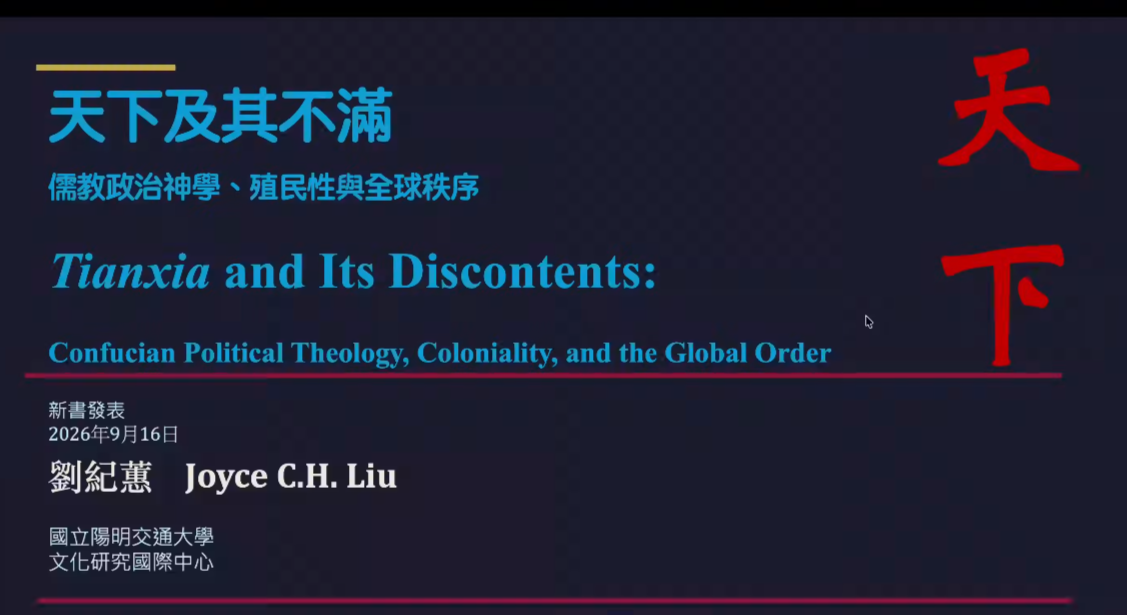
Tianxia and Its Discontents: Confucian Political Theology, Coloniality, and the Global Order (Routledge, 2026b)
2026-10-01
more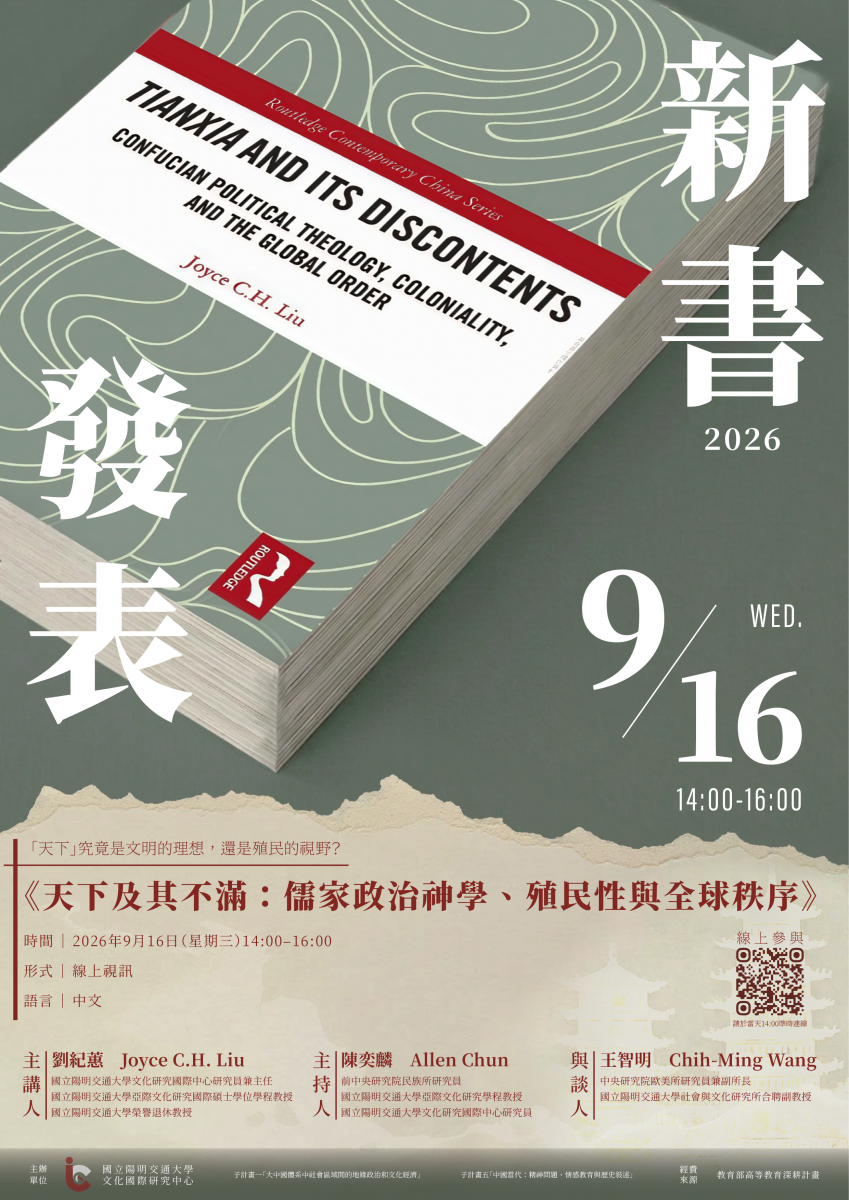
report|Tianxia and Its Discontents: Confucian Political Theology, Coloniality, and the Global Order (Routledge, 2026b)
2026-09-29
more.jpg)