近期出版 Recent Publication
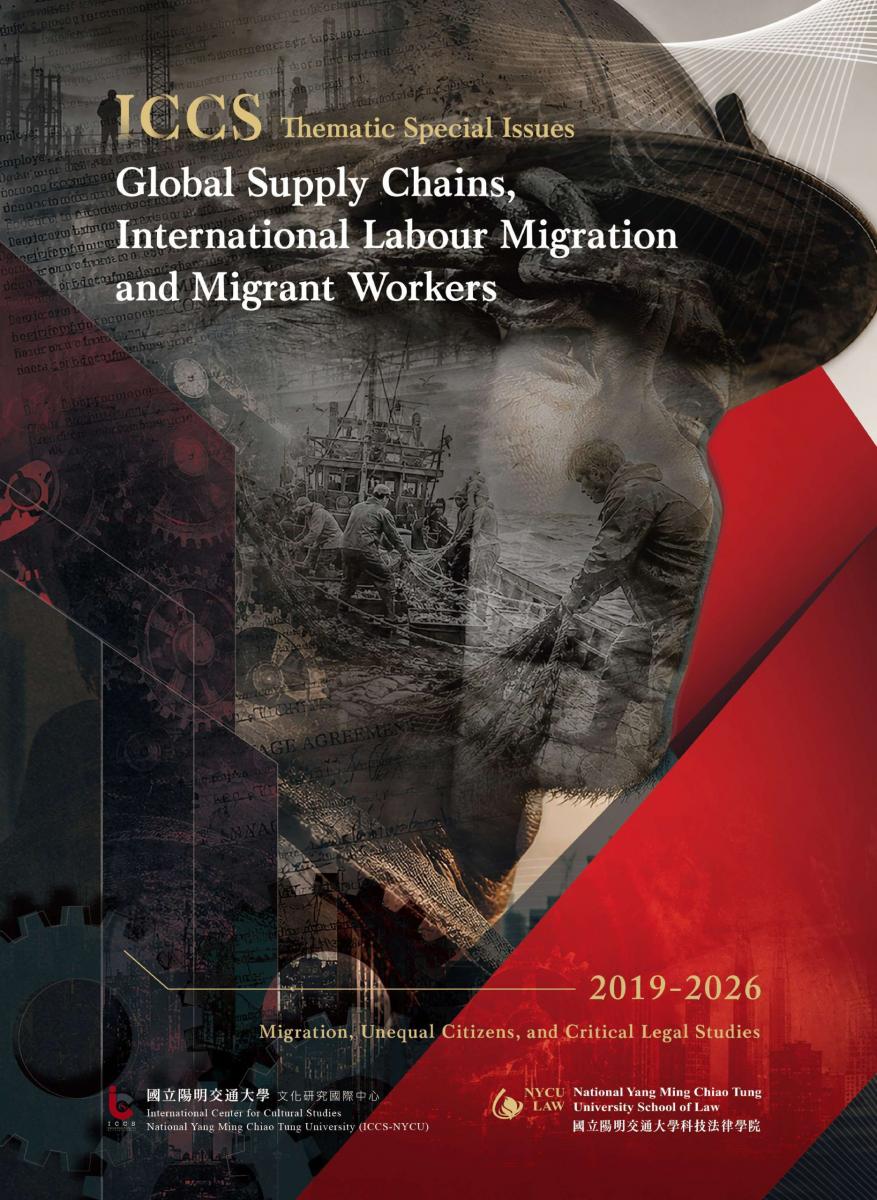
ICCS Thematic Special Issues: Global Supply Chains, International Labour Migration and Migrant Workers (2019–2026) — Migration, Unequal Citizens, and Critical Legal Studies
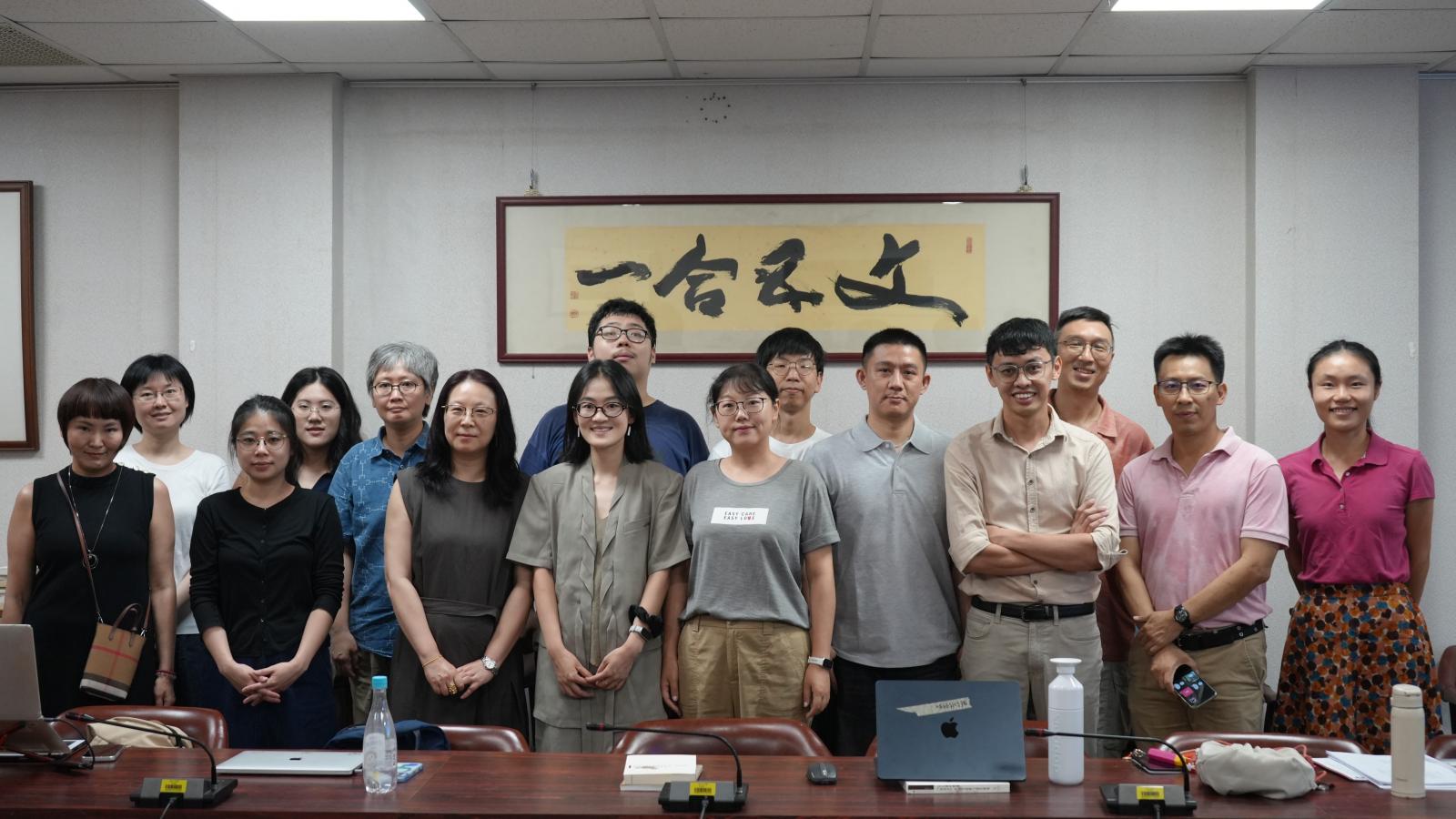
moreReport | “Keywords in Contemporary China” Collaborative Writing Workshop II
2026-10-08
Date: August 28–29, 2026
Venue: L522, Museum of Literature, Tamkang University
Format: In-person
Organizers: Contemporary China Research Project, International Center for Cultural Studies, National Yang Ming Chiao Tung University; Department of Chinese Literature, Tamkang University
The “Keywords in Contemporary China” Collaborative Writing Workshop seeks to use “keywords” as a research method for understanding contemporary China. Rather than simply collecting popular expressions or cultural phenomena, the workshop focuses on the two mutually constitutive concepts of “China” and “the contemporary,” and attempts to trace the historical experiences, institutional characteristics, affective structures, and cultural imaginaries of contemporary China through a series of keywords.
In terms of historical periodization, we regard 1949 and the period from 1978 to 2000 as two important historical starting points for understanding “contemporary China.” At the same time, we treat “China” itself as a concept that requires renewed reflection. The purpose is not limited to examining the meanings of individual terms; rather, each keyword serves as an entry point into the historical, literary, social, and intellectual contexts through which contemporary China can be understood.
Through collaborative writing and collective discussion, we hope to gradually construct a shared conceptual vocabulary for understanding contemporary China, map the complex landscape of contemporary China, and develop a body of documentary and research resources that can serve as a reference for future scholarship.
Song Yu-Wen — Assistant Professor, Department of Chinese Literature, National Central University
Tsai Meng-Che — Assistant Professor, Graduate Institute of Gender Studies, National Kaohsiung Normal University
Huang Wen-Chien — Associate Professor, Department of Chinese Literature, Tamkang University
Wang Chih-Ming — Research Fellow, Institute of European and American Studies, Academia Sinica; Convener, Contemporary China Research Project
Luo Xiao-Ming — Associate Professor and Director, Department of Literary Studies, Shanghai University
Author: Li Hui-Ling, Master’s Student, Department of Chinese Literature, Tamkang University
“Xiàhǎi” (下海) is a term officially included in the Modern Chinese Dictionary that has acquired new meanings at different historical moments. Taking “xiàhǎi” as her keyword, Li Hui-Ling begins with changes in its meanings to examine the historical periods and social transformations associated with the term, particularly its relationship to contemporary China, and raises several further questions that may be explored through the concept of “xiàhǎi.”
“Xiàhǎi” condenses different social imaginaries from different historical periods. During the 1980s and 1990s, “xiàhǎi” referred to “giving up one’s original occupation to engage in business.” It became a popular expression during this period and was closely associated with transformations in China’s social structure and value systems following the reform and opening-up. On the one hand, this signaled the loosening of the traditional notion of a society organized around officialdom and bureaucratic status; on the other hand, issues such as exchanges of power and money, increasing utilitarianism, and moral disorder began to emerge. In contemporary Chinese society, “shàng’àn” (上岸), literally “coming ashore,” has gradually become a representative popular expression, making “xiàhǎi” and “shàng’àn” a pair of terms worthy of comparison. This invites a further question: when “xiàhǎi” once meant leaving the institutional system and entering the market, while “shàng’àn” is now often used to refer to the pursuit of a stable life, what changes have taken place in Chinese people’s occupational aspirations and social attitudes?
At the beginning of the twenty-first century, another earlier meaning of “xiàhǎi”—referring to entering the sex trade or certain specialized entertainment industries—once again became prominent in everyday language and popular culture. In fact, the association between “xiàhǎi” and the sex industry can already be traced in twentieth-century literature and everyday language. Why did this meaning return to public attention? There are roughly three possible reasons. First, it was related to the historicization of “xiàhǎi” in the sense of going into business. Second, it was reinforced by the media and the internet. Third, it may have been connected to increasingly frequent cultural exchanges across the Taiwan Strait from the late 1990s to the early twenty-first century. Compared with “going into business,” the two usages refer to different activities, yet they share a semantic structure: leaving one’s original position and entering another space characterized by risk or transgression.
Entering the 2010s, “xiàhǎi” was reappropriated to refer to mainstream or otherwise conventional actors appearing in film and television productions featuring gay themes, particularly the genre known as “danmei adaptations” or dan gai dramas (耽改劇). The emergence and development of this meaning can be discussed in relation to relevant productions such as Addicted (2016), Guardian (2018), and The Untamed (2019). Notably, compared with the preceding period, this usage involves significant changes in gender, the body, and modes of cultural consumption. The differing public evaluations of the actors involved also raise questions worthy of further examination. In this sense, “xiàhǎi” has once again undergone a semantic “descent into the sea”: moving from the economic sphere into the realms of gender and the body, and from the moral discourse of everyday society into online subcultures.
Today, these three meanings have not replaced one another but coexist across different contexts. They reveal differences across periods and generations in China, as well as the continually shifting relationship between gender perceptions and cultural consumption. “Xiàhǎi” thus becomes a small but revealing entry point for observing contemporary China.
This text was automatically translated by AI.
近期新聞 Recent News
Publish | ICCS Thematic Special Issues: Global Supply Chains, International Labour Migration and Migrant Workers (2019–2026) — Migration, Unequal Citizens, and Critical Legal Studies
2026-10-07
more