近期出版 Recent Publication
ICCS Thematic Special Issues: Global Supply Chains, International Labour Migration and Migrant Workers (2019–2026) — Migration, Unequal Citizens, and Critical Legal Studies
moreReport | Education and Human Rights Dialogue Across Borders: ICCS-Parami Dialogue
2026-10-06
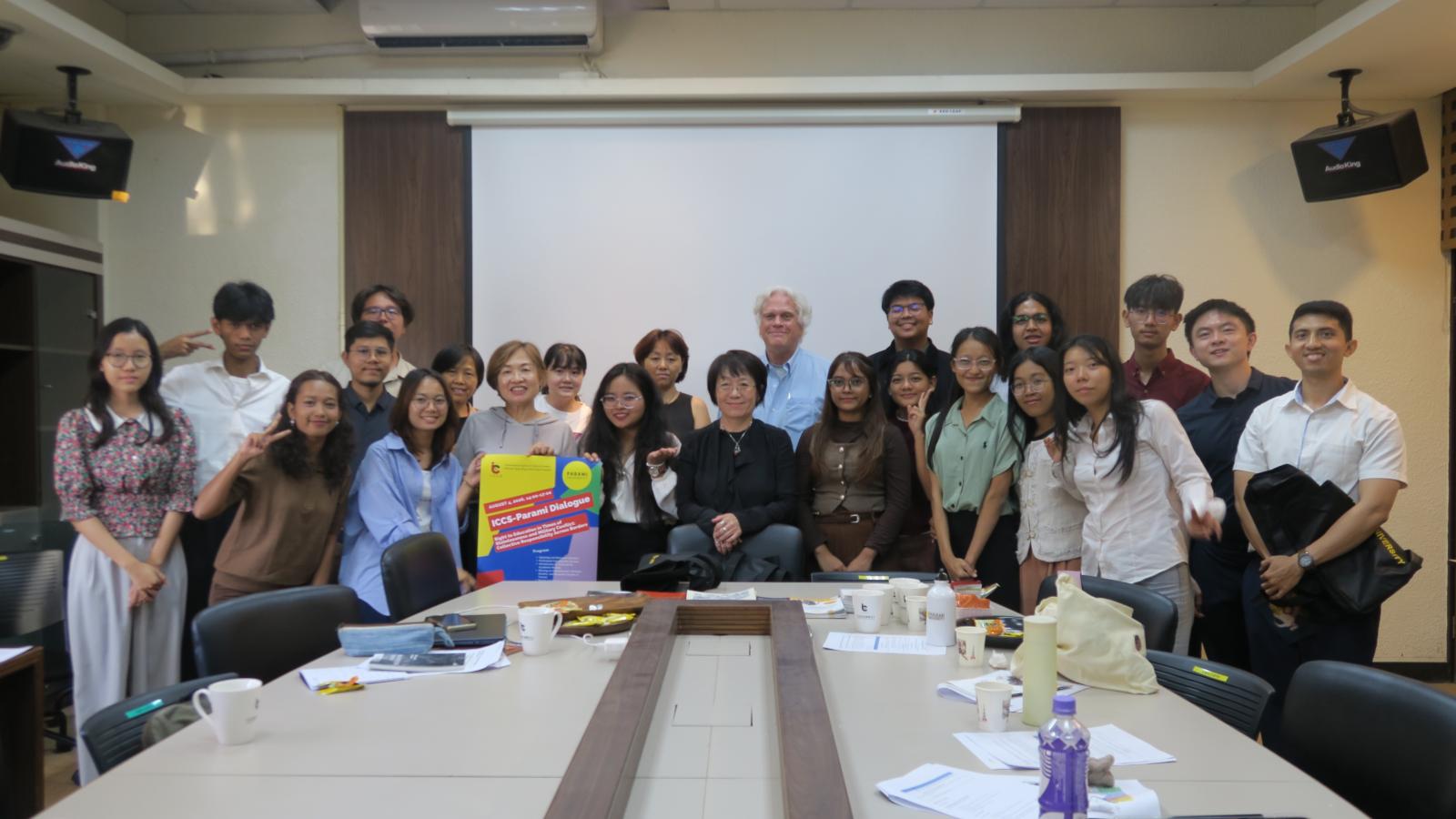
Sidelights | Education and Human Rights Dialogue Across Borders: ICCS-Parami Dialogue
Date and Time | August 4, 2026, 14:00-17:00
Venue | Room HC104, Humanities and Social Sciences Building III, Kuang-Fu Campus, National Yang Ming Chiao Tung University
Moderator | Joyce C.H. Liu (Professor Emeritus, Institute of Social Research and Cultural Studies, and Director of the International Center for Cultural Studies, National Yang Ming Chiao Tung University)
Speakers | Joyce C.H. Liu (Professor Emeritus, Institute of Social Research and Cultural Studies, and Director of the International Center for Cultural Studies, National Yang Ming Chiao Tung University), Mei-Lin Pan (Professor, Department of Humanities and Social Sciences, National Yang Ming Chiao Tung University), Dolma Tsering (Postdoctoral Researcher, International Center for Cultural Studies, National Yang Ming Chiao Tung University), Ni-Ni Peng (Ph.D., Department of Southeast Asian Studies, National Chi Nan University), Dan Wessner (Professor of Division of Social Science and Humanities & Director of University Partnerships and Engagement, Parami University), and Yen-Rong Lai (Refugee Issue Specialist, Taiwan Association for Human Rights)
Writer | Loinnir Chen (Master's Student, Graduate Program of Ethnicity and Culture, Department of Humanities and Social Sciences, National Yang Ming Chiao Tung University)
Opening and Introducing the ICCS (Speaker: Joyce C.H. Liu)
Director Joyce C.H. Liu welcomed the arrival of the faculty and students from Parami University, and briefly explained the agenda and planning of this event. As an important academic organization of National Yang Ming Chiao Tung University, the International Center for Cultural Studies (ICCS) is committed to promoting research related to "Conflict, Justice, Decolonization: Asia in Transition in the 21st Century." The center encompasses core fields such as geopolitics and cultural economy, digital governance, migration and unequal citizenship, environmental crises and multispecies justice, and artistic social interventions, and connects with the international academic community through interdisciplinary collaboration and its "Trans-Asian Research Network (TARN)." Finally, Director Joyce C.H. Liu also invited us to continue following the website of the ICCS, subscribe to our newsletter, and urged the students from Parami University to submit articles to the online journal "Conflict, Justice, Decolonization (CJD)"; they are welcome to contact us regarding any content of the center they wish to learn about.
Introducing the ICCS Subproject III Research Group "Refugee and Statelessness" (Speaker: Mei-Lin Pan)
Professor Mei-Lin Pan introduced herself as an economic sociologist who fortuitously entered India to begin researching exiled Tibetans, and she has devoted refugee studies for nearly twenty years. She took her research on the sweater market of exiled Tibetans in India [1] as an example to illustrate how, through field research, one can understand the identity and circumstances of stateless persons, and observe how refugees demonstrate their resilience through social networks across different environments. Subproject III Research Group “Refugee and Statelessness” was established by Professor Pan at this center this year, inviting relevant domestic and international scholars to initiate the sharing of academic achievements and issue advocacy. The research group is dedicated to four major research agendas: academic research and publication, international exchange and policy advocacy, social practice and public awareness, and teaching and talent cultivation. By organizing multiple events—such as Dr. Gyal Lo's lecture on "A Sociological Analysis of CCP Colonial Boarding Schools and the Future of Tibetan Cultural Preservation," Dr. Samaddar's lecture on "The Labouring Subject of Refugee Economies," and the Young Scholars’ Workshop on Refugee Studies—the research group continues to lead public attention toward the issues of stateless populations and refugees.
Research Presentation: Statelessness, Migration, and Academic Engagement (Speaker: Dolma Tsering)
As a second-generation Tibetan born and raised in India, Dr. Dolma Tsering shared her lived experiences as a "stateless Tibetan refugee", deliberately adopting the term to accurately reflect their legal reality. She explained that in India—which is neither a party to the 1951 Refugee Convention nor its 1967 Protocol—stateless Tibetan refugees are governed by domestic frameworks and categorized primarily by their year and place of birth. To elaborate, while Tibetans born in India between 1962 and 1987 have a legal basis to claim Indian citizenship, those born after 1987, including Dr. Tsering herself, face different statutory exclusions. Consequently, everyday legal status in India hinges on the Registration Certificate (RC), which requires periodic, in-person renewals to avoid jeopardizing lawful residence. Moreover, international mobility is severely restricted: traveling abroad requires an Identity Certificate (IC, or yellow travel document) alongside a No Objection to Return to India (NORI) permit, making cross-border travel a complex process of securing both departure and re-entry authorizations.
Reflecting on her six years in Taiwan, Dr. Tsering noted that Taiwan similarly lacks a comprehensive refugee law. Although she eventually secured an Alien Resident Certificate (ARC) after years of negotiations and contestations with government authorities, she emphasized that the predicament of stateless refugees extends beyond legal residency to basic survival rights, such as access to healthcare and employment. Synthesizing these experiences, Dr. Tsering offered a broader academic critique of how statelessness operates as a "transnational condition" reproduced through legal and administrative practices across borders. Rather than being recognized as individuals experiencing profound legal and social vulnerability, stateless people are frequently subjected to a lens of "securitization," where they are constructed as potential state threats. These perpetual demands for document renewals and travel permissions construct systemic institutional barriers that continue to constrain displaced Tibetans even after establishing long-term lives abroad.
Short Brief about Myanmar in Taiwan (Speaker: Ni-Ni Peng)
As an overseas Chinese from Myanmar who personally experienced the 2007 Saffron Revolution, Dr. Ni-Ni Peng first shared her own experiences of studying in Taiwan, and introduced to everyone the current situation of Myanmar nationals and Myanmar international students in Taiwan. Citing statistics from the Ministry of Education, she pointed out that the number of Myanmar international students in Taiwan has shown significant growth in recent years, substantially increasing from 928 students in 2020 to 2,973 students in 2024, of whom overseas compatriot students account for 2,200, and foreign students account for 773. Regarding admission channels, higher education is primarily facilitated through the University Entrance Committee for Overseas Chinese Students and the independent recruitment of individual universities; for high school and below, there are also recruitment channels under the Overseas Community Affairs Council, which coordinate with educational system reference lists and academic credential recognition mechanisms. Additionally, Dr. Ni-Ni Peng also mapped out the diverse Myanmar immigrant communities and local cultures across Taiwan, including the Water Festival at Myanmar Street in New Taipei City, the Longgang Rice Noodle Festival in Zhongli, Taoyuan, the Torch Festival in Qingjing, Nantou, and the Yunnan-Myanmar characteristic settlements in Ligang, Pingtung. Finally, Dr. Ni-Ni Peng posed the profound question of "Who are the Myanmar immigrants in Taiwan?", explaining that they include multiple statuses such as dependents of the National Revolutionary Army (the KMT irregular forces), overseas Chinese, overseas compatriot students, and new immigrants, demonstrating the particularity intertwined with national historical identities and diverse migration contexts.
Speech by students from Parami University (Speakers: Dan Wessner, Students of Parami University)
Professor Dan Wessner, who was responsible for leading 14 students in this international exchange activity, mentioned that prior to this exchange meeting, activities were conducted at NSYSU and in Taipei. The students collectively mentioned that Parami University is currently offering fully online degree program; therefore, before this international exchange activity, many students had previously only met in online classroom chat rooms, and classmates from different backgrounds and regions only got to know each other through this event. Even though they had already participated in activities for several days, this was the first time they had the opportunity to share their own life narratives, and they were profoundly grateful to the Center, Professor Dan Wessner, and Director Aung Myin Thu for jointly facilitating this opportunity, fostering a warm and safe space for mutual dialogue and exchange, giving each other the momentum to move forward.
The students pointed out the problems of the traditional educational system in Myanmar, the essence of which is a "banking model of education" that prohibits questioning and demands absolute obedience. Following the military coup in 2021, participating in the civil disobedience movement became a pathway for the youth to resist state violence, yet it also caused them to lose their right to education and official identity (their names were deregistered by schools controlled by the military junta), and they even became internally displaced persons within their own country due to the flames of war. Furthermore, female students highlighted that they endure intersectional disparagement from patriarchal ideologies within their families; for example, they are perceived as needing to enter marriage as early as possible, that pursuing higher education is a waste of time, and they are even questioned by relatives who suspect that the online university is a "scam," leaving them deeply trapped in isolation. Faced with the aforementioned predicaments, the students' core concerns demonstrated a significant shift from "pragmatism" toward "civic engagement." Initially, the majority merely craved a diploma in order to survive in the workplace. However, after receiving a liberal arts education, they began to reflect upon the root causes of social conflicts and viewed specialized disciplines such as philosophy, economics, and data science as tools for analyzing and resolving social problems. The students strongly desired to transform themselves through education into "gardeners" of social change, bringing critical thinking back to their communities and grassroots education, allowing lasting change to blossom quietly within everyday life.
An Overview of Refugee Situation in Taiwan (Speaker: Yen-Rong Lai) Presentation File
As an advocate for the Taiwan Association for Human Rights (TAHR), Specialist Yen-Rong Lai pointed out the significant gap between Taiwan’s commitments under international human rights conventions and its domestic asylum practices, and noted that the recent new draft of the National Human Rights Action Plan even removed the enactment of the Refugee Act as a key indicator [2], while the enactment of a Refugee Act has been delayed for over twenty years. She stated that, in the absence of legal status, refugees and asylum seekers not only face the threat of detention and deportation [3], but are also systematically deprived of basic survival rights such as legal employment, medical care, renting housing, and signing legal contracts. Drawing on her past experience interacting with Myanmar international students, Specialist Lai points out that, without adequate legal protection, many Myanmar youth asylum seekers are forced into vulnerable situations, and Myanmar international students may also come to Taiwan burdened with high debts under conditions of information asymmetry. Specialist Lai mentions that in controversies surrounding some New Southbound Policy industry-academia collaboration programs, students face the risk of poor labor conditions under the guise of internships, and some of them "need to skip their classes" due to factors such as long hours of internship, part-time work, and language barriers. Specialist Yen-Rong Lai urged Taiwanese society to recognize the history of Taiwanese democracy activists who benefited from international asylum during the period of martial law, proactively shoulder the responsibility of human rights protection, and establish a comprehensive legal system to safeguard the fundamental rights of asylum seekers.
Open Discussion
Professor Dan Wessner first addressed skeptical claims framing Parami as a fraudulent institution by asserting, "Parami is not a scam!", and pointed out that this dialogue provided the students with a space for emotional catharsis and expression, hoping to continuously deepen the academic partnership and collaborative relationship with the ICCS in the future. Director Joyce C.H. Liu emphasized that, when facing the collective trauma brought about by state violence, the oppressed cannot suppress or evade it, but must directly confront history; she also encouraged the students to empower themselves through sustained reading, critical research, and knowledge production (such as participating in publications for the CJD online academic journal). Director Joyce C.H. Liu called for breaking away from the citizenship framework of a single nation-state through social solidarity across borders, collaboratively cultivating the students who will rebuild the grassroots society of their home country in the future. Professor Mei-Lin Pan drew upon Taiwan's 38-year history of martial law and democratization as a mirror, hoping it serves as a historical reference for Myanmar youths in their resistance against authoritarianism, demonstrating that democratic institutions still possess the possibility of reconstruction. Approaching the issue from a practical standpoint, Dr. Ni-Ni Peng highlighted a mutually beneficial space for cooperation between Taiwan and Myanmar. While Taiwan offers educational sanctuary to displaced Myanmar youth, these students in turn enrich the higher education landscape and broaden its horizons with their diverse backgrounds and community involvement. This approach effectively meets the critical sanctuary and educational needs of Myanmar's youth. Dr. Peng warmly welcomes any students with relevant plans to reach out to her. These discourses all lead us to consider how, on the basis of respecting domestic rule of law and human rights values, we can fulfill the social responsibility of the transnational academic community, transforming the educational space into a critical base for resisting authoritarian narratives, healing collective trauma, and accumulating social capital for future democratization.
Notes
[1] Pan, Mei-Lin, 2011, " A Displaced Moral Economy: Tibetan Refugee Sweater Markets and Associations in India." Taiwanese Journal of Sociology 46: 1–55.
[2] Human Rights Information Portal, Executive Yuan, 2026, "02. The New National Human Rights Action Plan: Chapters on Human Rights Issues (Draft).pdf". https://www.ey.gov.tw/hrtj/83E5FBBD47B54AE4/0ad87440-7a14-4cd8-a8a9-7dc7be0a6104?shem=rimspwouoe, Accessed September 24, 2026.
[3] Specialist Lai mentions that, even though the government has actively promoted the International Review Conference on the National Reports on the Two Covenants and the National Human Rights Action Plan in recent years, substantive progress remains limited. For example, although there are currently administrative measures targeting Myanmar asylum seekers that adopt a case-by-case review to issue a "Temporary Alien Registration Certificate" after the Taiwan Association for Human Rights assisted with individual applications, it was found that there are still no successfully approved cases
近期新聞 Recent News
Publish | ICCS Thematic Special Issues: Global Supply Chains, International Labour Migration and Migrant Workers (2019–2026) — Migration, Unequal Citizens, and Critical Legal Studies
2026-10-07
more