
近期出版 Recent Publication
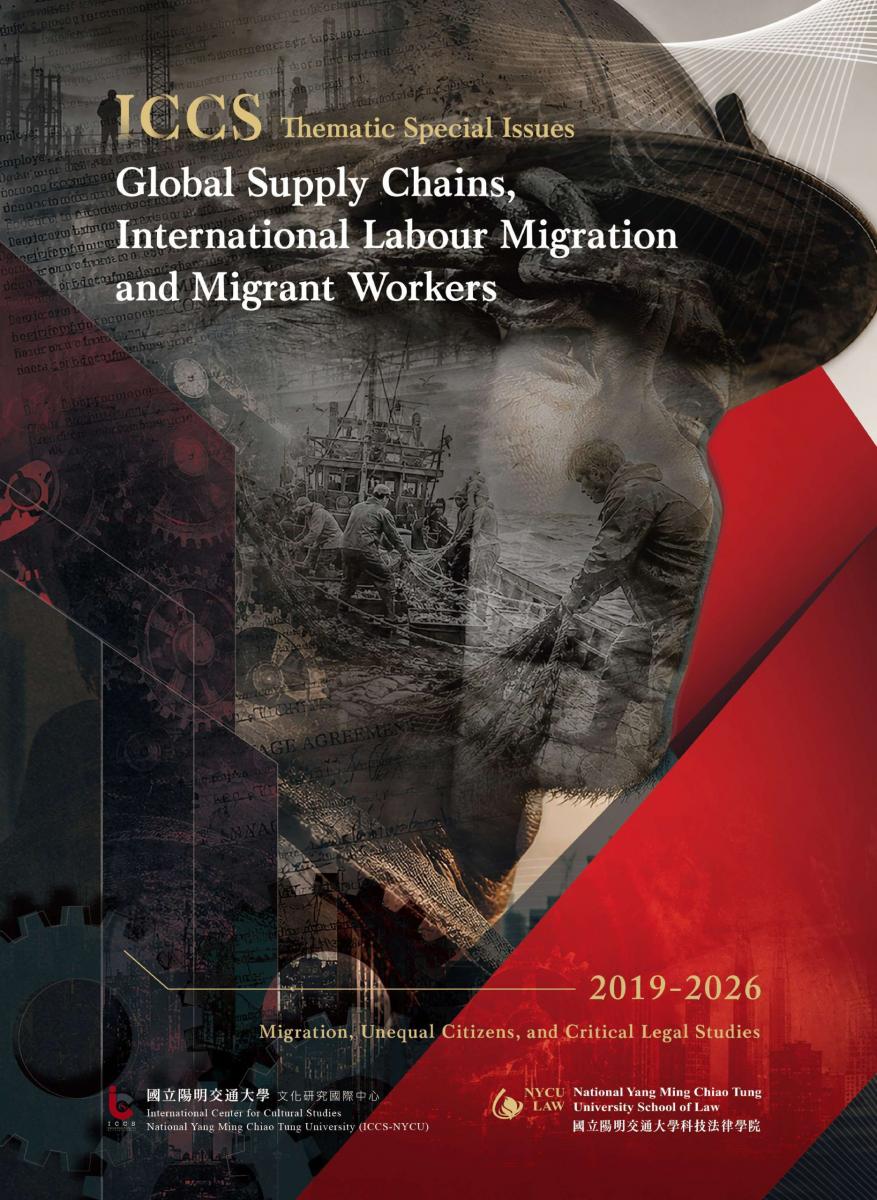
ICCS Thematic Special Issues: Global Supply Chains, International Labour Migration and Migrant Workers (2019–2026) — Migration, Unequal Citizens, and Critical Legal Studies
moreReport | “Keywords in Contemporary China” Collaborative Writing Workshop II 2.zhanshan xian / 斬殺線
2026-10-13
Date: August 28–29, 2026
Venue: L522, Museum of Literature, Tamkang University
Format: In-person
Organizers: Contemporary China Research Project, International Center for Cultural Studies, National Yang Ming Chiao Tung University; Department of Chinese Literature, Tamkang University
The “Keywords in Contemporary China” Collaborative Writing Workshop seeks to use “keywords” as a research method for understanding contemporary China. Rather than simply collecting popular expressions or cultural phenomena, the workshop focuses on the two mutually constitutive concepts of “China” and “the contemporary,” and attempts to trace the historical experiences, institutional characteristics, affective structures, and cultural imaginaries of contemporary China through a series of keywords.
In terms of historical periodization, we regard 1949 and the period from 1978 to 2000 as two important historical starting points for understanding “contemporary China.” At the same time, we treat “China” itself as a concept that requires renewed reflection. The purpose is not limited to examining the meanings of individual terms; rather, each keyword serves as an entry point into the historical, literary, social, and intellectual contexts through which contemporary China can be understood.
Through collaborative writing and collective discussion, we hope to gradually construct a shared conceptual vocabulary for understanding contemporary China, map the complex landscape of contemporary China, and develop a body of documentary and research resources that can serve as a reference for future scholarship.
Song Yu-Wen — Assistant Professor, Department of Chinese Literature, National Central University
Tsai Meng-Che — Assistant Professor, Graduate Institute of Gender Studies, National Kaohsiung Normal University
Huang Wen-Chien — Associate Professor, Department of Chinese Literature, Tamkang University
Wang Chih-Ming — Research Fellow, Institute of European and American Studies, Academia Sinica; Convener, Contemporary China Research Project
Luo Xiao-Ming — Associate Professor and Director, Department of Literary Studies, Shanghai University
Speaker Notes — Keyword: Kill Threshold(zhanshan xian / 斬殺線)
Author: Yin Yi-long, Master's Student at the Institute of Sinophone Literatures, National Tsing Hua University
It is a great honor to participate in this "Keywords of Contemporary China" collaborative writing workshop. As a master's student, this workshop has provided me with a rare and valuable space for learning and academic exchange. The keyword I selected is "Kill Threshold" (zhanshan xian / 斬殺線), a concept originally derived from gaming terminology that has transformed into a form of social cognition. My essay attempts to detach the term from its initial controversies surrounding American society, shifting the inquiry toward how it came to be broadly understood by the Chinese public. I view the "Kill Threshold" as an affective experience of modernity lived within "the system": as individuals become increasingly accustomed to understanding their own positions through the lenses of calculation, competition, and risk, "being excluded" gradually turns into a tangible existential anxiety. In a sense, the popularity of "Kill Threshold" precisely translates this abstract insecurity into an imaginable line of survival.
During the workshop, I was particularly intrigued by Professor Luo Xiaoming’s insights on the relationship between "the contemporary" and "clumsiness/crudeness" (zhuolie / 拙劣). "Clumsiness" itself echoes the current backdrop of deglobalization. To some extent, ever since the pandemic, we have become increasingly acutely aware of the dissonance between grand narratives—such as globalization and interconnectedness—and our lived, present-day experience. It feels as if all things are destined to move toward their opposites; as the once "vibrant" colors of the globalization narrative gradually fade, many narratives about the contemporary have begun to take on a sheen of "clumsiness."
Reinterpreting "Kill Threshold" along this line of thought, I realized that its widespread popularity might itself be a mode of articulating this "clumsiness": a narrative carrying a sensation-seeking flavor—akin to unearthing an urban legend—blends with a gaming term and ultimately becomes a nationwide social talking point. Furthermore, when this narrative takes the United States as its focal point, "Kill Threshold" takes on a certain jouissance in the Žižekian sense. In my understanding, contemporary "clumsiness" perhaps lies in the fact that people are gradually learning to accept the natural degradation of things. As positive expectations for the future and certain benevolent social customs recede, people turn instead to cynicism, bystander observation, and revelry to seek a trivial, residual pleasure. What the "Kill Threshold" provides is precisely such a discourse—a frame that allows one to observe the plight of the Other while simultaneously compartmentalizing one's own anxiety.
Another deeply impressionable discussion came from Professor Wang Chih-ming’s re-examination of "Contemporary China." He reiterated that "Contemporary China" requires us to simultaneously address two interacting dimensions: "China" and "the contemporary." How China understands its own position of development in the contemporary world, and how the world evaluates China's impact on the contemporary era, are processes that continuously shape each other.
This also prompted me to reconsider several keywords from the morning session on "Society and Culture." Whether it is "Kill Threshold" or "Involution" (neijuan / 內卷), their appearance in everyday Chinese discourse primarily presents an internal perspective—used to make sense of China's current predicaments, competition, and crises. However, once we re-contextualize them within the dynamic interaction between "China" and "the contemporary," China’s internal sense of crisis can equally be understood as part of a structural crisis of the contemporary world. A captivating tension exists here: China today has reason to feel confident in the achievements made in recent years regarding manufacturing, exports, and Chinese brands going global; yet the flip side of these achievements is the growing alertness, and even sense of crisis, that an increasing number of countries feel toward Chinese competitiveness. In some ways, China may be precisely one of the countries most eager to continue engaging with the world according to market logic. Yet, when this market logic turns back inward onto China, the fierce competition, demands for efficiency, and risk of elimination experienced by individuals constitute the very contemporary crisis we can abstract from keywords like "Kill Threshold" and "Involution."
Therefore, if I continue writing on "Kill Threshold" as a keyword going forward, I intend to link it more consciously to the concept of "crisis" and further situate it within the mutually constitutive relationship between "China" and "the contemporary." Once again, my sincere thanks to all the professors and participants for their insightful shares and discussions, as well as for this collaborative writing opportunity, which allowed me to look back at my keyword and discover the directions in which it can further expand.
Translated by AI
近期新聞 Recent News
.png)
Report | “Keywords in Contemporary China” Collaborative Writing Workshop II 2.zhanshan xian / 斬殺線
2026-10-13
more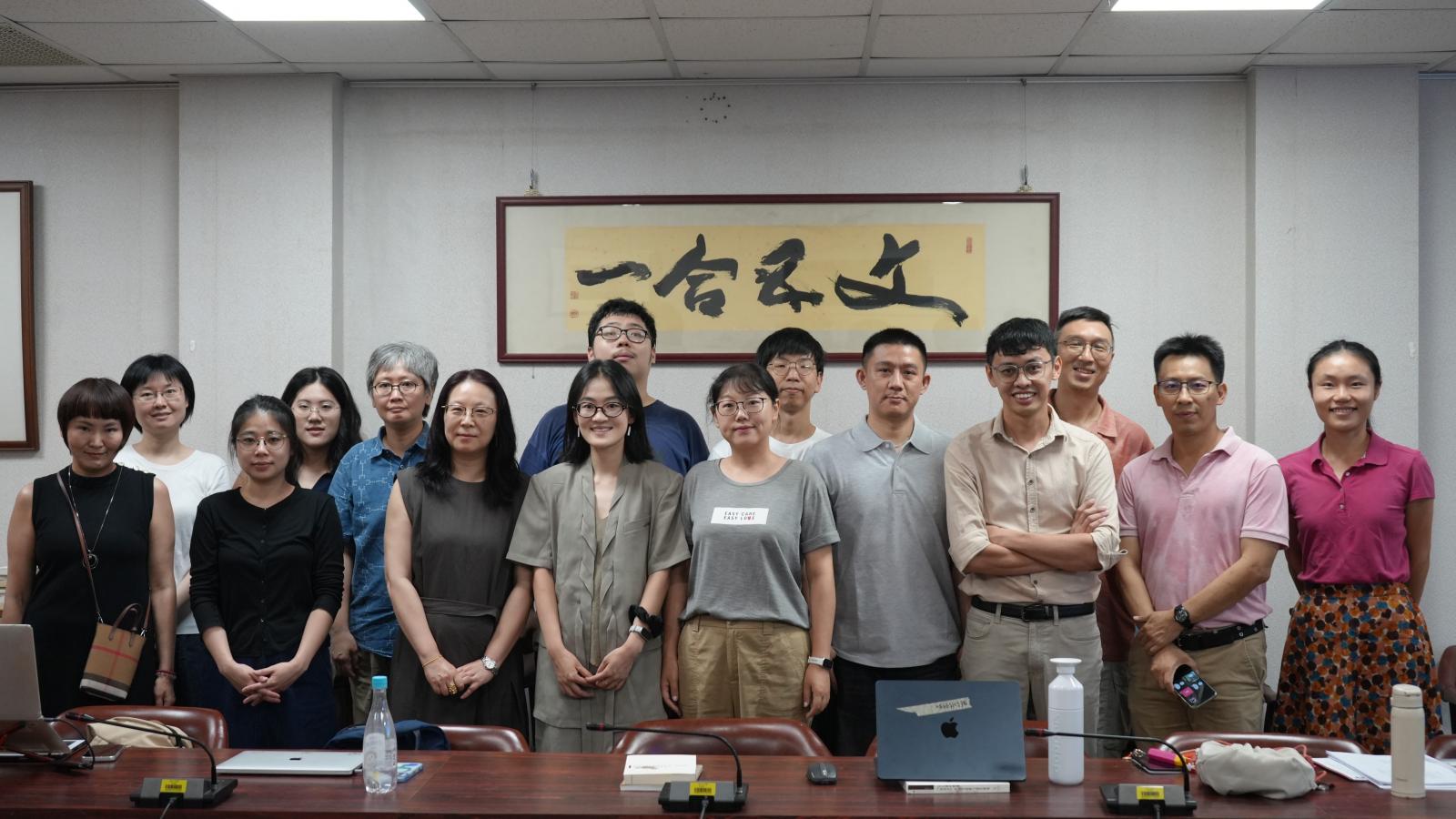
Publish | ICCS Thematic Special Issues: Global Supply Chains, International Labour Migration and Migrant Workers (2019–2026) — Migration, Unequal Citizens, and Critical Legal Studies
2026-10-07
more